Saturday, October 22, 2011

Computers

Way back in the early 1970s while I was working at the California School for the Deaf in Berkeley somebody at the nearby Lawrence Hall of Science got a brilliant idea. Maybe deaf people could communicate with each other at a distance by sending computer signals as if they were telegrams.
They ran some phone lines over the hill to our campus and connected them to several teletypewriters or TTYs. Those devices were about five feet square and two feet deep and had keyboards.
It worked! They could actually access material on the computer at their lab.
Computers were scary, but we were required to attend training and learn to use that technology before it became available for the students.
I sat in front of the contraption and tried a program called "Dorothea" after a famous psychologist named Dorothea Dix. The program was supposed to help students cope with emotional problems by encouraging them to share their feelings.
I'd had college classes in psychology and knew the non-directive phrases like "How do you feel about that?" so I typed some of them in as responses to prompts and within a few minutes the computer had become confused and was sending me gibberish.
Whew! A computer wasn't smart enough to do those scary sci-fi things we'd heard about after all.
Of course today computers can do things we could only have imagined back then and they're part of our every day lives. I'm proud to have been involved in one of the very first internet communications.

Wednesday, October 19, 2011

Keep On Blogging

More than ten years ago the word, blog, didn't exist. It originated as a combination of the world wide web (www) and a log where people posted things they wrote online as if they were writing in a journal. Blog is short for web log and blog has also become a verb.
Five years ago I had no idea I would ever be one of those blogging people, but I've been doing it here for three years.
When blogs first became popular they were considered an easy way for authors to publicize their books because there weren't very many blogs and most of them had lots of readers. Now, of course, there are thousands -- perhaps even millions -- of blogs and people have become selective about which ones they read, so blogging can't be used for publicity as easily as it once was.
When my first book was under contract I was told it was important to have a blog so, being a good girl, I started this one. But I didn't want it only to be a form of advertising for my books and wondered how I could possibly think of something new to post twice a week. Probably I'd run out of ideas and have to give up in a few months.
Well, obviously that hasn't happened. It seems there's always more to say about words, books and kids. I've reviewed dozens of books, including classics I loved as a child, library books I enjoy, and new books written by authors I know. Hints and information about kids, parenting, and language have often appeared here, too. And I can always post links to other sites.
Since my posts appear on Facebook most of the comments people make are on that site but that's okay.
While it's great if people who read my blog posts also buy my books, I'd probably keep blogging even if the books were all out of print because it's a fun way to communicate.
Those of us who blog may never run out of things to say.

Saturday, October 15, 2011

Free Play

"Mom, can I go out to play now?"
If you're old (like me) you probably remember asking that question.
After reminding you to say "May I" in stead of "Can I," and checking to be sure you'd finished all your chores the answer was usually, "Okay" with a reminder about how to behave and when to be back home.
Then you'd rush out the front door to find your friends.
Wait a minute! Do I mean kids actually went out without adult supervision?
We sure did.
As long as the commies didn't drop an atomic bomb that day parents assumed we'd be okay.
Illegal drugs were something the papers reported were becoming a problem back in poorer sections of New York City and molestation was never mentioned in public. Only the children of rich people might get kidnapped and held for ransom and we knew to be careful not to be run over by cars.
Of course we'd often get skinned knees, someone might get a black eye in a fight and once in a while a kid might even fall out of a tree and break a bone, but nobody would get sued because of things like that. They were considered a normal part of growing up.
And we had the advantage of spending hours using our imaginations.
We might pretend to be cowboys and Indians, princesses and knights in shining armor, space explorers, detectives, horses, jungle animals, doctors, parents, or anything else we could think of. Sometimes we'd play games, but those weren't organized by adults and we could change the rules any time we agreed on new ones.
Since today's kids always have adults watching them and are usually in groups with others near the same age it's unusual for them to do pretending play after they enter grade school. For many children, electronic games are the only opportunity they have for using their imaginations.
It's a shame today's kids don't have the kind of freedom we enjoyed.

Wednesday, October 12, 2011

Holidays 2011

I don't like to sound like a grinch, but it bothers me that some stores had Christmas stuff for sale in mid September and even more are displaying some of it along with the Halloween stuff now.
Yes, I know stores get most of their income from holiday purchases and, in this economy, they want to make all they can. (Actually they've probably always wanted to do that.) But it's only October.
Christmas has become so commercialized it's a problem to keep children from becoming greedy at this time of year. While I must admit that I wouldn't mind making a bit more money myself, I really hope some kids who read or hear my Christmas book about Saint Nicholas, Secret Service Saint, will be inspired to focus on giving and helping others rather than how much stuff they can get.

Saturday, October 8, 2011

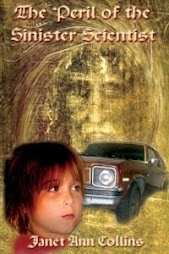
The Peril of the Sinister Scientist

When my first book, The Peril of the Sinister Scientist, was published in the summer of 'o9 I took a copy to the local paper but they had no interest in my press release. This week, to my surprise, Ryan Rindels, a new writer for the paper, called me. He said he'd been given the copy of my book by an editor, and interviewed me about writing.
On Thursday he sent a photographer to my house. As you can tell by the photo, my dog found the camera fascinating.
Yesterday the story ran and it took up most of the front page in the Religion section. I was amazed to have such a big spread.
I wish the nice young man who wrote the article had mentioned my newer books, but I'm pleased to have gotten this unexpected publicity.
Here's the link to the story and picture: http://www.theunion.com/article/20111007/FEATURES/111009763/1066&ParentProfile=1053

Wednesday, October 5, 2011

Oxygen

Years ago when I first joined a writers' critique group I'd had a few things published in periodicals but was bringing book manuscripts for critique. Some of the other members were sharing excellent work and I was afraid if they got books published before I did I'd be jealous.
But when John Olson and Randy Ingermanson (Randy lived far away but had visited our group) got their book, Oxygen, published and it went on to win a Christy award I wasn't jealous at all. Instead I felt like a proud grandmother because our group had become almost like a family and we'd all helped John and Randy nurture that wonderful book.
The plot was exciting, the characters believable, etc. and even those of us who knew both the authors couldn't tell which parts had been written by either of them because the teamwork was flawless. No wonder it won that award!
John and Randy have just re-published Oxygen as an e-book, and have added a lot of information helpful to writers at the end. That material will also be of interest to anyone who wants to know how a book gets published.
Although the book is for adults, there's nothing in it that would be inappropriate for kids and I think lots of teens would love it. It's on sale on Amazon for only 99 cents for a few days and I hope it sells well. After all, it's sort of like my great grandbaby. ;-)

Saturday, October 1, 2011

Successful Parents

What makes a successful parent? We tend to think that depends on what our children do when they grow up.
Some people use their kids as status symbols and want them to be rich and/or famous. Most parents want their kids to become self sufficient and have happy marriages and children of their own. And nearly all parents want their kids to avoid becoming criminals or destroying their lives by addictions or reckless behavior.
But the choices adults make are outside their parents' control.
We can try to teach our kids to be responsible, get adequate educations, and make wise decisions. Above all they'll need to have compassion, integrity, and common sense in order to have successful adult lives.
There's no guarantee the things we try to teach will sink in and last but it's important to keep trying. And probably the most important thing parents can do is demonstrate the values they want their children to have.